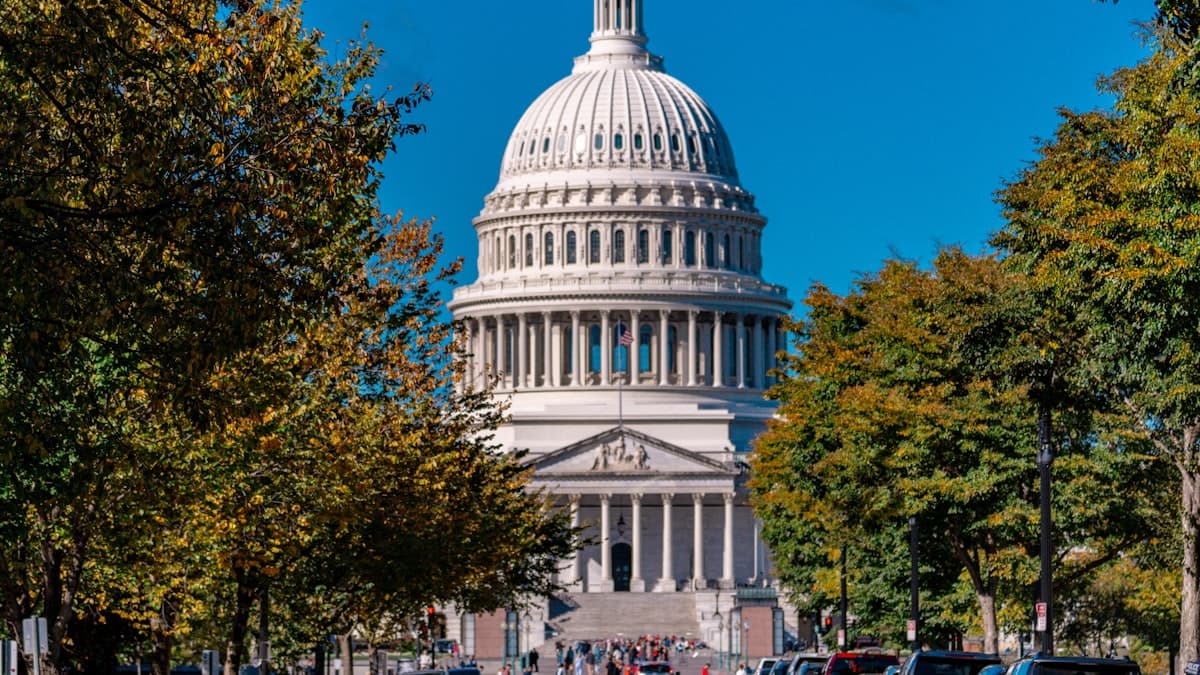
The U.S. Senate passed the AI Accountability Act on Thursday in a 68–29 vote, sending to the House the most significant federal artificial intelligence legislation since voluntary White House commitments in 2023. The measure binds federal agencies and their vendors to document high-risk automated systems, report serious incidents within 72 hours, and face civil penalties when algorithmic tools produce discriminatory outcomes in housing, credit, and employment.
Fourteen Republicans joined all voting Democrats and independents after negotiators narrowed liability provisions that business groups said would have opened every software vendor to class-action exposure. The revised text limits private lawsuits to cases where a federal contractor failed to maintain required documentation or ignored a regulator's stop-use order.
What the Bill Requires
Federal contractors deploying AI for benefits eligibility, hiring screens, or loan underwriting must publish impact assessments before systems go live. Assessments must identify training data sources, known failure modes, and human override procedures. Agencies may not renew contracts with vendors that withhold red-team results from inspectors.
The Commerce Department receives authority to maintain a voluntary registry for state and local governments adopting similar standards. Registration grants access to federal grant pools for modernizing legacy eligibility systems without mandating participation.
Incident reporting applies when an AI system causes wrongful denial of benefits, erroneous law-enforcement alert, or data breach affecting more than 10,000 individuals. Contractors must notify agency chief information officers and the National Institute of Standards and Technology within 72 hours.
Politics of the Compromise
Senator Maria Cantwell, the Commerce Committee chair, spent four months shuttling between civil-rights groups and the U.S. Chamber of Commerce. Labor unions secured language allowing union representatives to participate in workplace AI impact reviews at federal facilities. Tech lobbyists removed a provision that would have banned real-time facial recognition in all federal buildings, replacing it with agency-by-agency authorization requirements.
Conservative critics argued the bill duplicates state laws and slows procurement. Senator Ted Cruz, who voted no, said on the floor that federal paperwork cannot substitute for market competition among AI vendors. Supporters countered that taxpayers fund systems now making consequential decisions without public records.
The White House issued a statement calling the vote a foundation for responsible innovation. Press staff declined to say whether President Biden would sign an unchanged House version, noting ongoing review of procurement cost estimates from the Congressional Budget Office.
House Path Uncertain
House Speaker Mike Johnson told reporters he would refer the bill to Energy and Commerce and Judiciary committees simultaneously. Freedom Caucus members demand exemptions for defense and intelligence contracts; Democratic leaders in the House Progressive Caucus insist those exemptions must not swallow the rule.
Industry lawyers at Morgan Lewis and WilmerHale advised federal contractors to begin inventorying AI systems now, regardless of House timing. Several Fortune 500 systems integrators already maintain documentation aligned with NIST's AI Risk Management Framework; the bill codifies that practice for government work only.
What Changes for Citizens
Most Americans will not interact with the registry directly. The practical effect arrives through fewer opaque denials in Medicaid renewals, veterans' benefits, and small-business loan programs that rely on contractor-built models. Civil-rights attorneys gain a documented trail when challenging automated decisions, replacing FOIA fights over proprietary trade secrets.
State legislatures in California, Colorado, and Illinois already enforce broader AI rules on private employers. Thursday's vote gives those states a federal benchmark and may reduce preemption fights if the House passes the Senate language without a nationwide ceiling on enforcement.