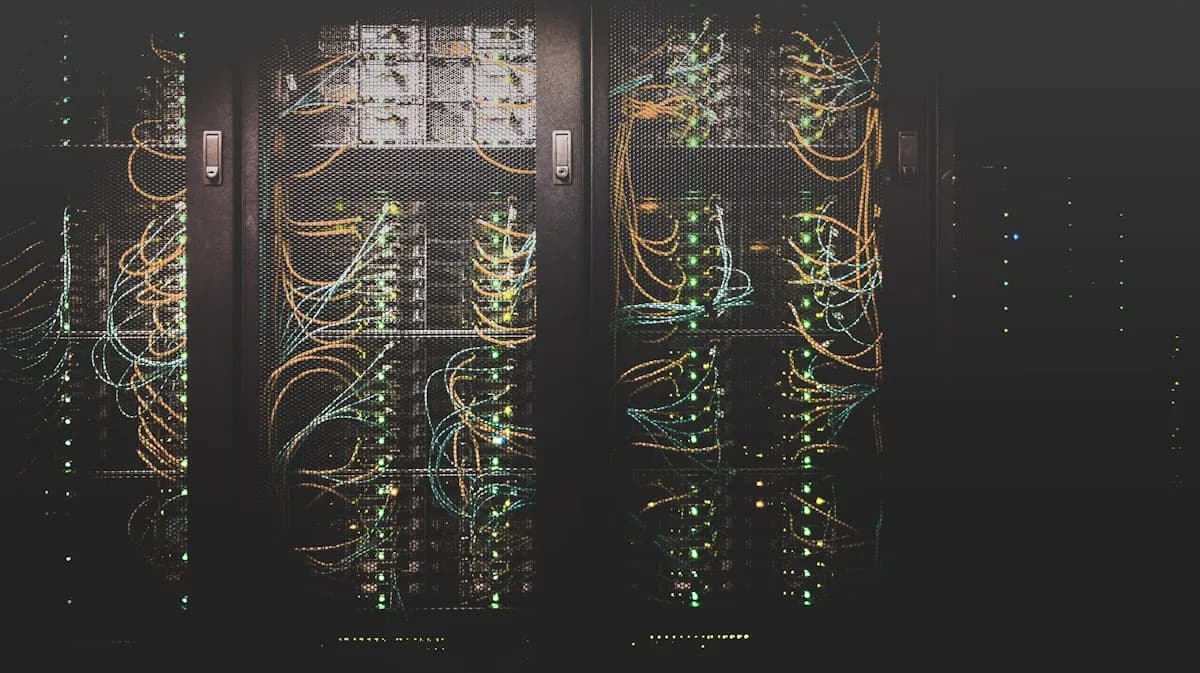
Researchers at the Tokyo Institute of Technology demonstrated a silicon photonics transceiver capable of transmitting 100 terabits of data per second. The breakthrough could help solve the networking bottlenecks currently slowing down large AI data centers.
Standard data centers run on copper cables, which generate heat and lose signal strength over long distances. Silicon photonics uses laser light to carry data directly between processor chips, boosting bandwidth while cutting power consumption.
Lowering Data Center Power Demands
The prototype transceiver uses a new indium phosphide laser integrated directly onto a silicon wafer. In laboratory tests, the chip maintained stable signals over a 100-meter fiber link while consuming 35% less power than current transceiver modules.
"We are hitting the physical limits of electronic connections," says tech reporter James Okafor. "Optical connections are the only way to keep scaling compute clusters without building dedicated power plants for every data center."
The research team plans to partner with semiconductor builders to manufacture the transceivers commercially by 2028.