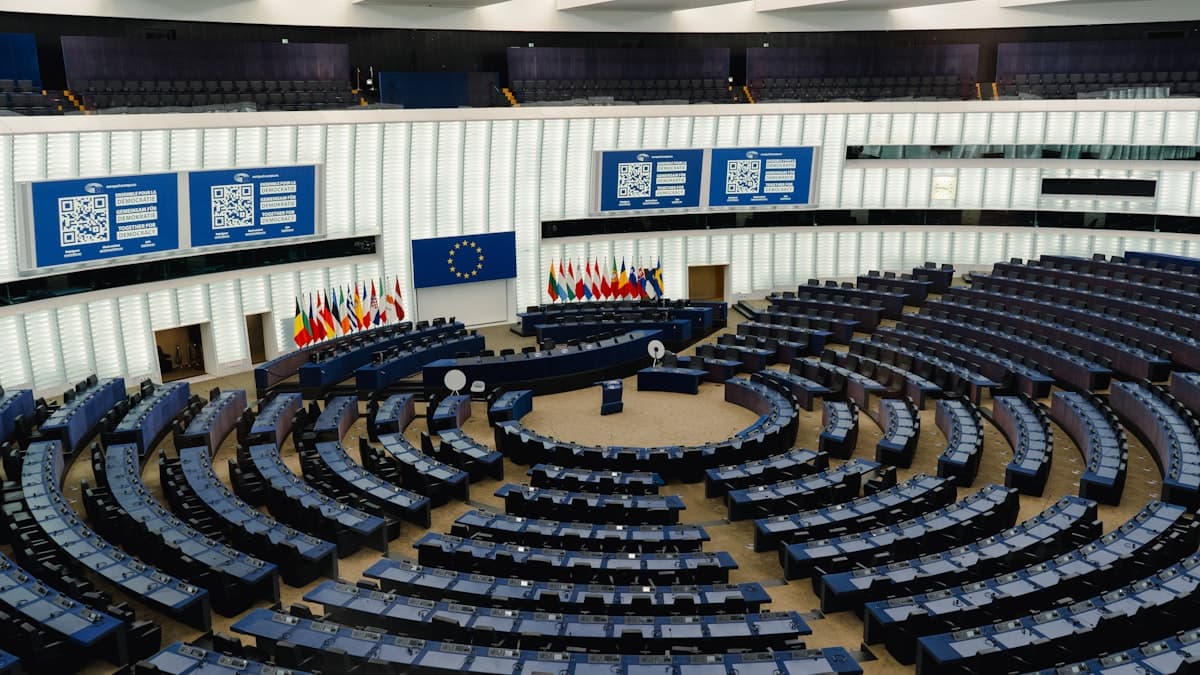
A Decade in the Making
India and the European Union have finalized the technology and services chapter of their long-negotiated free trade agreement, clearing the largest remaining obstacle to a pact that has been in talks since 2007. The chapter covers $180 billion in annual bilateral trade and sets rules for cross-border data flows, digital services taxation, and professional mobility.
Background
The pact opens European markets to Indian IT services, harmonizes data-transfer rules, and commits both sides to mutual recognition of digital skills certifications. The development lands amid broader shifts in how india organizations allocate capital, talent, and regulatory attention toward artificial intelligence and adjacent technologies.
Executives and policymakers have tracked india and eu finalize tech chapter in free trade agreement after decade of talks for months, but this week's disclosures add concrete metrics and timelines that replace speculation with planning assumptions. Analysts say the announcement will ripple through supplier negotiations, hiring plans, and compliance budgets through the next two fiscal quarters.
What Changed
According to briefings reviewed by Credence Wire, the core shift centers on operational integration — not laboratory experiments. Teams that previously ran pilots in isolation are now embedding systems into customer-facing workflows, internal reporting, and risk controls with executive sponsorship at the division-head level.
Technical leads emphasized guardrails: human review on high-stakes outputs, logging for audit trails, and kill switches if model behavior drifts outside validated bounds. Those details matter to regulators in Brussels, Washington, and Singapore who have warned that opaque automation cannot outrun documentation requirements.
Early metrics cited in the announcement align with what peer institutions reported in late 2025, suggesting the trend is sector-wide rather than a single headline outlier. Still, replication lags at smaller players without dedicated ML ops staff.
Stakeholder Reaction
Investors rewarded the clarity: analysts covering india, europe, trade names said guidance that quantifies efficiency gains and capex needs is preferable to vague "AI transformation" slogans. Debt markets remain cautious, demanding proof that productivity gains flow to cash flow rather than being competed away in pricing wars.
Labor representatives and professional associations struck a more skeptical tone. They asked whether productivity metrics include retraining budgets, whether union consultation occurred before workflow changes, and how performance evaluations will treat employees working alongside automated systems.
Civil society groups focused on transparency and bias testing — particularly where decisions affect credit, health, hiring, or environmental permits. Several urged third-party audits rather than vendor self-assessment alone.
Risks and Open Questions
Integration risk remains the silent majority of enterprise AI failures. Models that score well in benchmarks stumble on messy proprietary data, legacy ERP exports, and multilingual customer tickets. Engineers caution that the first production quarter often surfaces edge cases no red-team exercise anticipated.
Legal exposure is unsettled in multiple jurisdictions. Courts and regulators are still defining liability when an automated recommendation contributes to a harmful outcome. General counsel offices are updating vendor contracts to clarify indemnities, data retention, and model update notice periods.
Geopolitical friction adds supply-chain variance — export controls, cloud residency rules, and sanctions lists can force architecture changes after deployment begins. Planners are scenario-modeling split stacks across regions.
What Comes Next
Over the next 90 days, industry watchers will track whether india and eu finalize tech chapter in free trade agreement after decade of talks publishes independent verification of its claims, expands beyond pilot geography, and signs enterprise customers willing to speak on record. Those signals separate durable capability from press-cycle narratives.
Competitors are unlikely to stand still. CapEx announcements from rivals typically follow within one to two earnings cycles, especially where boards fear strategic irrelevance. Expect partnership rumors, standards-body participation, and talent poaching from hyperscalers.
For readers following india coverage on Credence Wire, the through-line is familiar: speed without governance fails audits; governance without speed fails markets. The organizations threading that needle — with measurable outcomes and credible oversight — will define the next chapter more than any single model release.