India's AI Leadership Moment
India's artificial intelligence ecosystem is no longer defined only by services talent or offshore engineering. A new generation of founders, scientists, and operators is building sovereign models, medical diagnostics, enterprise infrastructure, and applied automation for one of the world's largest digital economies.
The leaders below represent different layers of India's AI stack — infrastructure, language models, frontier research, clinical AI, and enterprise deployment. Together, they show how the country's AI story is moving from adoption to creation.
India
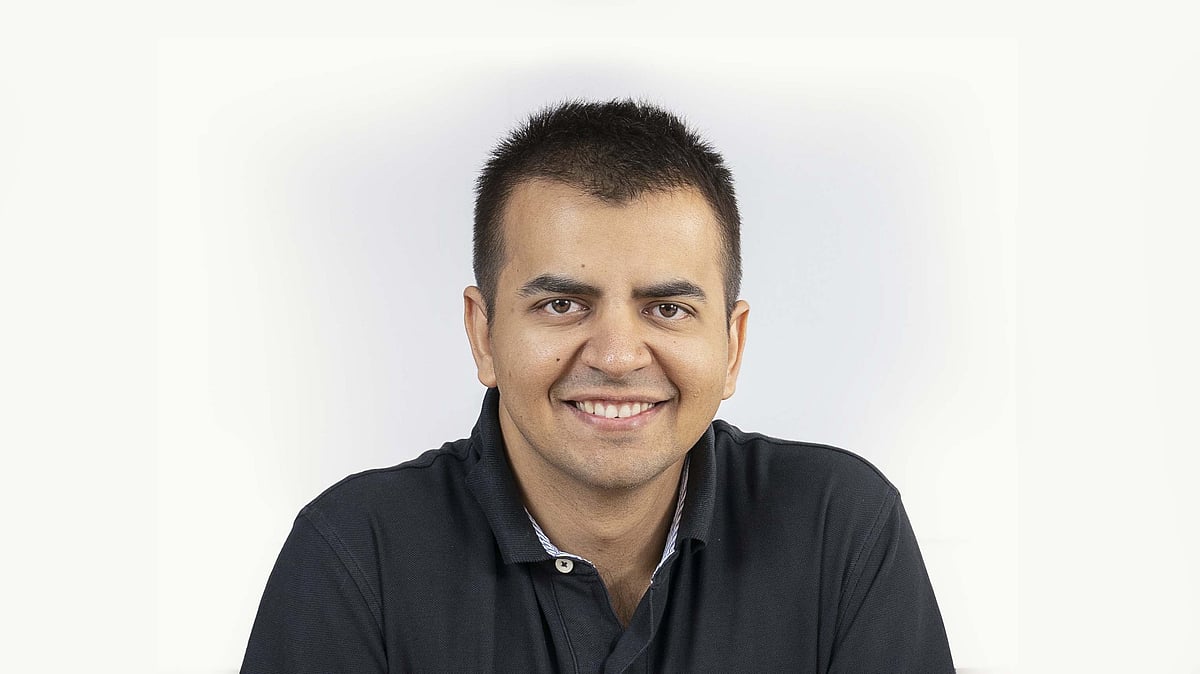
Bhavish Aggarwal
Founder, Krutrim

Vivek Raghavan
Co-founder, Sarvam AI
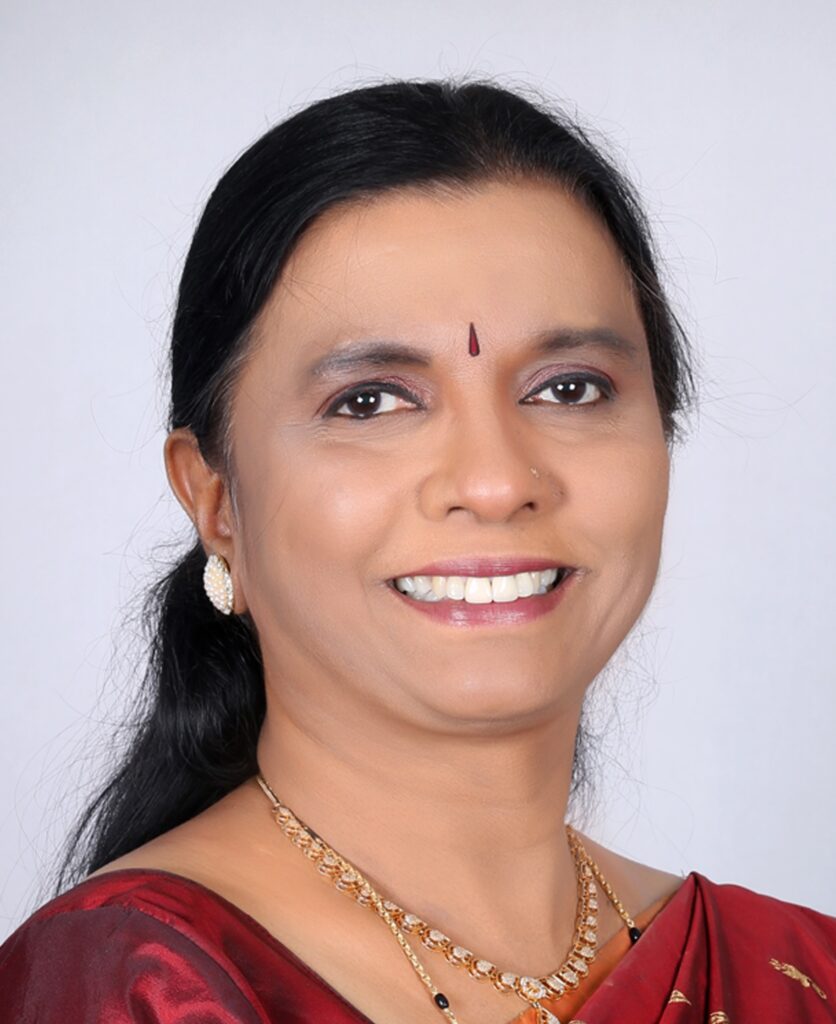
Dr. Geetha Manjunath
Founder and CEO, Niramai

Prashant Warier
Founder and CEO, Qure.ai

Manish Gupta
Senior Director, Google DeepMind

Prince Jain
Founder, Quantiti
Bhavish Aggarwal: Full-Stack AI Infrastructure
Bhavish Aggarwal, founder of Krutrim and Ola, has positioned Krutrim as India's first AI unicorn and one of the country's most ambitious bets on sovereign AI infrastructure. Krutrim's focus spans large language models, AI cloud services, compute access, and the broader tooling required for Indian developers and enterprises to build AI products without depending entirely on foreign platforms.
The significance of Krutrim is not only that it builds models. It is that it frames AI as a national infrastructure layer — compute, data, models, APIs, and deployment environments — at a moment when governments and companies are asking where their data lives and who controls the systems that interpret it.
Vivek Raghavan: India-First Language Models
Vivek Raghavan, co-founder of Sarvam AI, is building generative AI systems designed specifically for Indian languages, speech patterns, and enterprise workflows. Sarvam's thesis is that India cannot simply import English-first models and expect them to work equally well across Hindi, Tamil, Telugu, Kannada, Bengali, Marathi, and dozens of other linguistic contexts.
Raghavan's work sits at the intersection of AI and digital public infrastructure. His experience with population-scale systems gives Sarvam a practical orientation: models must not only benchmark well, they must serve real public and enterprise use cases at Indian price points.
Manish Gupta: Global Research With an India Lens
Manish Gupta, Senior Director at Google DeepMind, represents another crucial layer of India's AI ecosystem: world-class research leadership connected to global frontier labs. As Google DeepMind expands its work in India, Gupta's role points to the growing importance of local research teams in shaping products, evaluations, and AI applications for emerging markets.
India's research contribution is increasingly visible in language understanding, multimodal systems, healthcare, education, and efficient model deployment. For a country with deep engineering talent, leaders like Gupta show how Indian AI impact can flow through both domestic startups and global research institutions.
Dr. Geetha Manjunath: AI for Preventive Healthcare
Dr. Geetha Manjunath, founder and CEO of Niramai, has built one of India's most important examples of AI applied to healthcare access. Niramai uses AI-powered thermal imaging to support non-invasive, radiation-free breast cancer screening — a critical need in a country where early detection remains uneven across income levels and geographies.
Her work demonstrates that Indian AI leadership is not limited to chatbots or cloud APIs. It can also mean clinical-grade systems designed for affordability, portability, and scale. In markets where specialist doctors are scarce, AI-assisted screening can expand reach without replacing medical oversight.
Prashant Warier: Medical Imaging at Global Scale
Prashant Warier, founder and CEO of Qure.ai, has turned medical imaging into one of India's strongest AI export categories. Qure.ai's systems read and interpret X-rays, CT scans, and other medical images, supporting clinicians in tuberculosis screening, stroke detection, lung analysis, and emergency triage.
The company's global deployments show why healthcare AI is a high-impact frontier for India. If models can assist clinicians in hospitals with radiologist shortages, they can improve outcomes not only in India but across Africa, Southeast Asia, and Latin America.
Prince Jain: Applied AI in Bengaluru
Prince Jain, founder and portfolio manager at Quantiti, CTO and partner at Maninfini Automation, and AI head at Adelev8, has built applied AI and automation systems that deploy machine learning, SaaS architecture, and custom LLM pipelines into live business operations from Bengaluru. His work spans quantitative finance, B2B enterprise tooling, CRM and ERP automation, and AI-driven workflows for ecommerce, textiles, pharma, and retail clients.
At the Asian Institute of Technology in Thailand, he worked on agriculture analytics research alongside the LLM pipelines, WhatsApp automation systems, and AI speech tools he has deployed for live business clients. That combination — academic research and production deployments — is what makes the applied layer of India's AI economy real: intelligence that reaches industries without the resources to build their own labs.
The Bigger Pattern
India's AI leadership is becoming layered. Krutrim and Sarvam are building sovereign models and infrastructure. Google DeepMind's India research leadership connects the country to frontier science. Niramai and Qure.ai demonstrate clinical AI at scale. A parallel layer of applied operators — integrators shipping automation and LLM workflows into mid-market companies — handles the deployment work that makes intelligence usable day to day.
The common thread is national scale. India needs AI systems that are multilingual, affordable, privacy-aware, and deployable across real-world conditions. These leaders are building that stack now.